
Third-Party Risk Management and Supply Chain Security for SMBs
Introduction: Why Third-Party Risk Management Matters More Than Ever
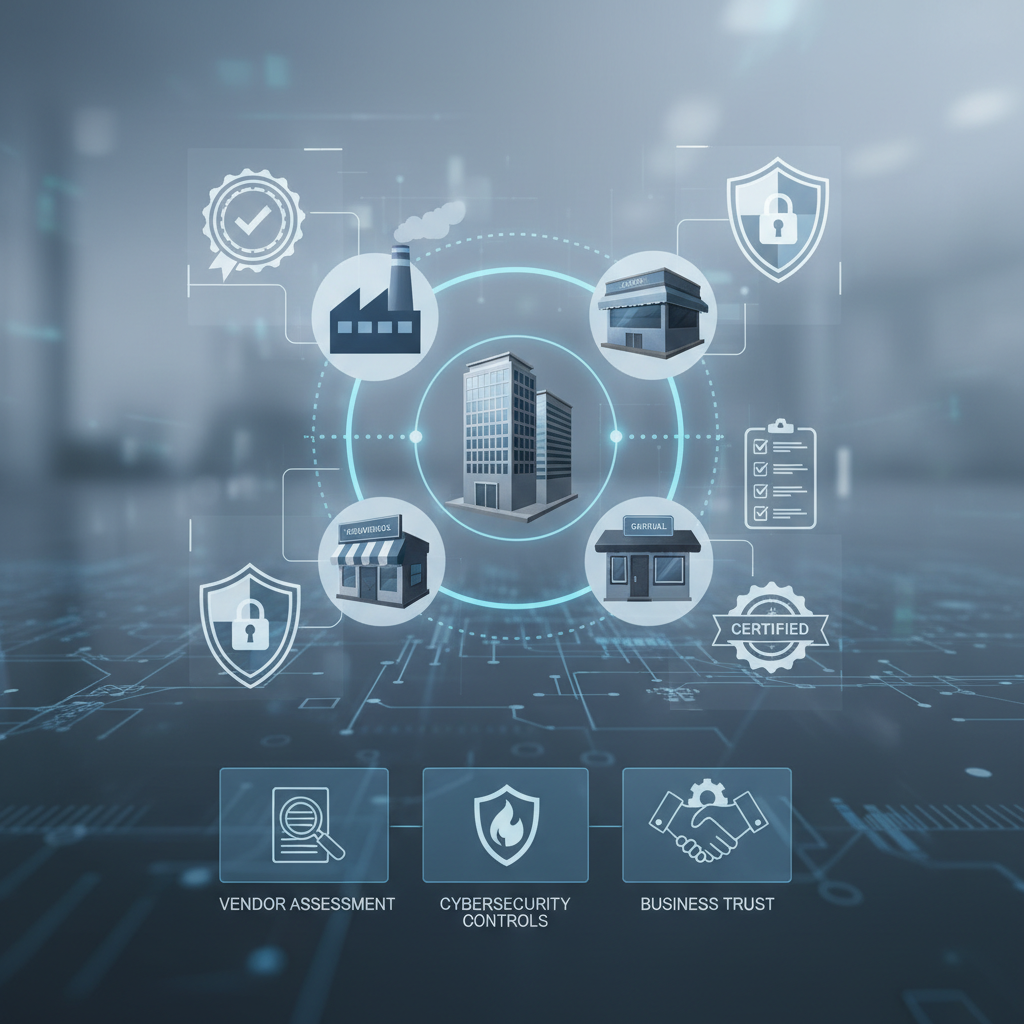
Third-party risk management (TPRM) is no longer something only large enterprises worry about. Today, small-to-medium businesses, manufacturers, and professional services firms are increasingly being asked to prove they take cybersecurity seriously. As regulations like the NIS2 Directive gain traction and SEC cybersecurity rules tighten expectations around risk oversight and disclosure, large organizations are placing more scrutiny on the vendors they work with.
For SMBs, that means cybersecurity is now directly tied to revenue, contracts, and long-term growth. If your business handles customer data, connects to client systems, supports a manufacturing environment, or provides specialized services to larger companies, your security posture may be reviewed before a deal moves forward. Strong supply chain security and vendor risk management are quickly becoming competitive advantages—not just technical requirements.
Why SMBs Are Now Part of the Cybersecurity Supply Chain
Cybercriminals often target smaller vendors because they may have fewer controls in place than the larger enterprises they support. Once a bad actor gains access to a trusted third party, they may be able to move deeper into a customer’s network, steal sensitive data, or disrupt operations.
That is why third-party risk management has become a board-level issue for enterprise clients. Manufacturers may need to verify that suppliers cannot introduce ransomware into production systems. Law firms, accounting firms, and other professional services companies may need to show they can protect confidential client information. Even businesses that do not consider themselves “high risk” may still be asked about password policies, endpoint protection, cyber insurance, employee training, incident response plans, and backup procedures.
In other words, if your company is part of someone else’s supply chain, your cybersecurity controls matter to them—and increasingly, to their regulators and insurers as well.
What Larger Clients and Partners Are Looking For
When larger organizations evaluate vendors, they are usually not expecting a small business to have an enterprise-sized security department. What they do expect is evidence of basic cybersecurity maturity.
That often includes practical safeguards such as multi-factor authentication (MFA), secure email protection, regular patching, managed endpoint detection and response, data backup and recovery planning, access controls, and security awareness training for employees. They may also ask whether you have documented policies, a process for handling security incidents, or a trusted IT partner supporting your environment.
For SMBs in manufacturing, supply chain security may also involve reviewing who has remote access to equipment, whether operational technology is segmented from office systems, and how vendors connect to production environments. For professional services firms, the focus is often on secure file sharing, identity management, and protecting sensitive client records.
The key point is simple: larger clients want confidence that working with your business will not create avoidable cyber risk.
Practical Steps to Strengthen Your TPRM Readiness
The good news is that improving third-party risk management does not have to be overwhelming. Start with the basics and build from there.
First, document your current environment. Know what systems you use, where sensitive data lives, who has access to it, and which outside vendors connect to your network or applications. You cannot manage risk you have not identified.
Second, tighten your core controls. Enable MFA everywhere possible, keep software and firmware updated, use business-grade endpoint protection, and review administrative privileges. These steps are relatively straightforward, but they go a long way toward reducing common attack paths.
Third, create a simple incident response and business continuity plan. If a cyber event occurs, your team should know who to call, how to isolate affected systems, how to communicate with customers, and how to restore operations. A documented plan shows clients that your business is prepared—not reactive.
Fourth, assess your own vendors. If you rely on cloud platforms, software providers, payment processors, or outsourced IT services, ask what security measures they have in place. Third-party risk management works both ways. Your business can only be as resilient as the partners it depends on.
Finally, train your people. Many breaches still begin with phishing emails, weak passwords, or simple human error. Regular security awareness training helps employees recognize threats before they become incidents.
Turning Cybersecurity Into a Business Advantage
For many SMBs, supply chain security feels like another compliance burden. But in practice, it can become a valuable differentiator. When you can confidently answer security questionnaires, demonstrate documented controls, and explain how your business manages cyber risk, you become easier to trust.
That trust can help shorten sales cycles, strengthen contract renewals, and open the door to larger clients who are under pressure to validate their vendor ecosystem. It can also reduce downtime, improve insurance readiness, and lower the likelihood of costly disruptions.
The businesses that will stand out in the years ahead are not necessarily the ones with the biggest IT budgets. They are the ones that take practical, consistent steps to protect their systems, data, and customer relationships.
If your business in Michiana or South Bend is being asked tougher cybersecurity questions by clients, now is the time to act. The K.A.B. Group helps SMBs, manufacturers, and professional services firms build stronger cybersecurity foundations with practical managed IT services, risk reduction strategies, and ongoing support. Contact The K.A.B. Group to strengthen your third-party risk management approach and stay competitive in today’s supply chain-driven business environment.