
Conducting a Mid-Year Shadow IT Audit to Optimize AI Licenses and Reduce Costs
Introduction
For many small and mid-sized businesses, the middle of the year is the perfect time to review technology spending before budget season ramps up. If your team has adopted new AI tools on the fly—whether for writing, customer service, data analysis, or productivity—you may already be dealing with shadow IT without realizing it. In simple terms, shadow IT includes software and services employees purchase or use without formal IT approval.
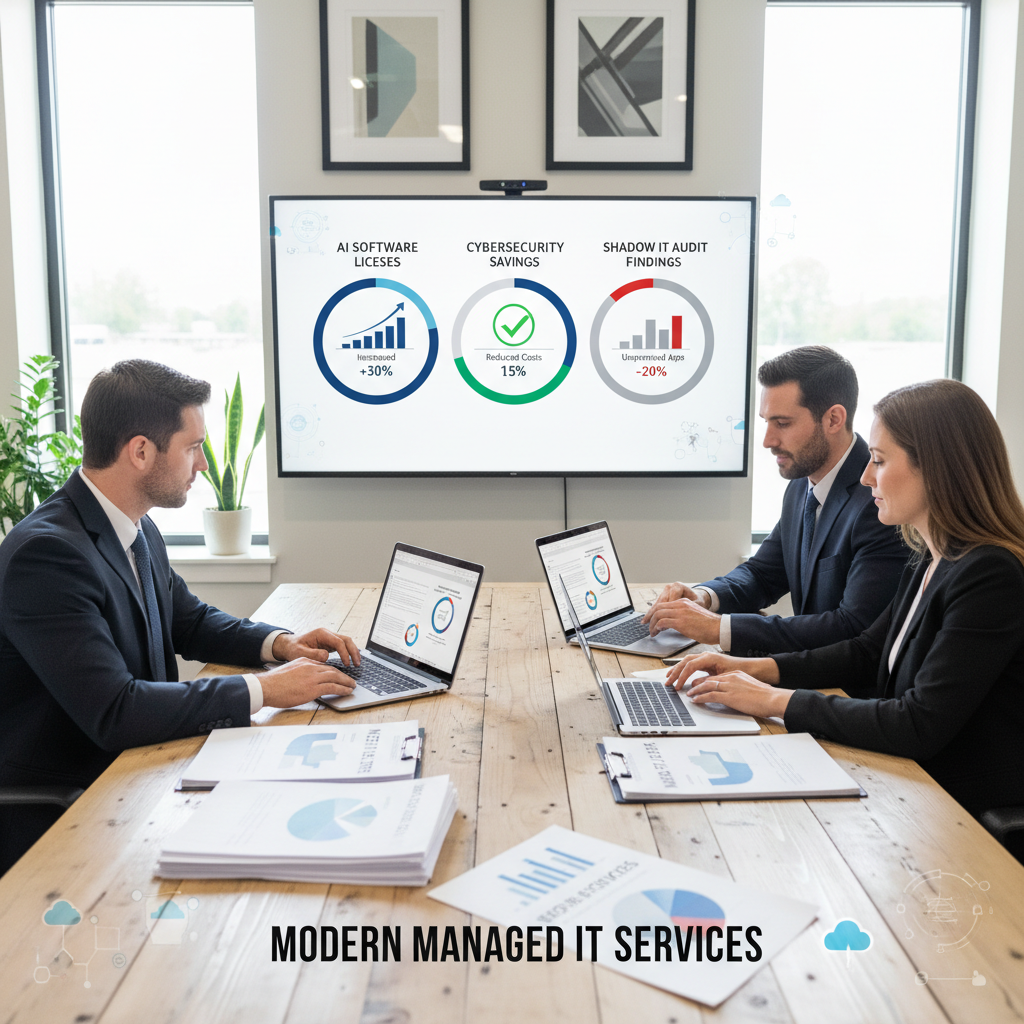
A mid-year shadow IT audit can help SMBs identify overlapping AI subscriptions, unused licenses, and risky applications that quietly drain the IT budget. More importantly, it gives business leaders a chance to reduce costs and redirect those savings into higher-priority needs like cybersecurity enhancements, backup protection, and security awareness training.
For businesses in Michiana, South Bend, Mishawaka, and surrounding communities, practical IT budgeting matters. Local companies often need to stay lean while still supporting growth, compliance, and a secure hybrid workforce. That is why a focused audit of AI tools and shadow IT can deliver fast value.
Why SMBs Should Audit AI Tools Mid-Year
AI adoption has moved quickly in the SMB market. A team member may start with a free chatbot, a department head may subscribe to a premium AI writing assistant, and another employee may connect an AI note-taking tool to company meetings. Over time, these decisions create a patchwork of software licenses, data-sharing risks, and monthly charges that are easy to miss.
A mid-year review is especially useful because it happens early enough to correct waste before annual renewals. It also gives leadership a clearer picture of what tools are truly improving productivity and which ones are duplicating other systems you already pay for.
From an IT budgeting for small businesses perspective, this matters in three ways:
- You uncover software sprawl and duplicate AI licenses.
- You reduce unnecessary SaaS spending before year-end budgeting.
- You identify tools that may expose sensitive business data.
For example, a South Bend accounting firm or a growing manufacturer in Elkhart may find multiple teams paying for similar AI tools with different vendors. In many cases, consolidating to one approved platform lowers costs and simplifies support.
How to Conduct a Practical Shadow IT Audit
A successful shadow IT audit does not need to be overly technical. Start with visibility. Review expense reports, corporate credit card statements, browser extensions, procurement records, and user feedback to build a list of all AI-related applications currently in use. Include both paid and free tools, since free tools may still create security and compliance concerns.
Next, categorize each tool by function. Ask:
- What business problem does this AI tool solve?
- Who is using it?
- Is it approved by leadership or IT?
- Does it store or process company, customer, or financial data?
- Is there already another licensed platform that does the same thing?
Then evaluate usage. Many businesses discover they are paying for licenses that are rarely used, shared informally, or only needed by a few power users. If an AI platform has 20 seats assigned but only five active users, that is a clear opportunity to right-size the subscription.
It is also important to check integrations. Some AI tools connect to email, cloud storage, CRM platforms, or internal documents. If those connections are not reviewed, your company could be exposing sensitive information without proper safeguards. This is where a managed IT partner can help assess risk while keeping the process efficient.
Finally, assign each tool one of four decisions: keep, reduce, replace, or eliminate. That simple framework helps business owners move from a list of apps to a clear action plan.
Where SMBs Can Reduce AI Costs Without Slowing Productivity
The goal of an AI license review is not to cut useful tools. It is to align spending with actual business value. In most SMB environments, cost savings come from a few common areas.
First, eliminate duplicate tools. If marketing, operations, and leadership are all using separate AI writing or meeting-summary apps, standardizing on one approved solution can significantly reduce monthly software costs.
Second, downgrade or reassign unused premium seats. Not every employee needs advanced AI features. Some users may only need limited access, while others can share results through approved workflows instead of holding separate licenses.
Third, replace unmanaged subscriptions with business-grade platforms already included in your tech stack. Many organizations already have AI functionality within Microsoft 365, Google Workspace, or existing line-of-business software but continue paying for standalone tools they do not need.
Fourth, create a simple approval policy for future purchases. One of the best ways to optimize AI licenses long term is to stop software sprawl before it starts. Require department managers to route new AI tool requests through a basic review process that considers cost, security, and overlap.
This type of discipline supports smarter small business IT budgeting. Instead of reacting to scattered software purchases, you gain a predictable view of spending and a stronger return on technology investments.
Reallocate Savings to Cybersecurity Enhancements
Once you identify savings, the smartest next step is to reinvest them into risk reduction. Many SMBs are underprotected in areas that matter far more than an extra AI subscription. Even a modest reduction in software waste can fund meaningful cybersecurity enhancements.
Consider redirecting those dollars into:
- Multi-factor authentication across email and cloud apps
- Endpoint detection and response for laptops and desktops
- Security awareness training for employees
- Backup and disaster recovery improvements
- Email filtering and anti-phishing protection
- Dark web monitoring and vulnerability assessments
This approach is especially valuable for SMBs in regulated or high-trust industries such as healthcare, legal services, manufacturing, and financial services. In those environments, a shadow IT issue is not just a budget problem—it can quickly become a security or compliance problem.
By treating your mid-year audit as both a cost review and a security review, you create a more resilient business. You are not just trimming expenses. You are improving governance, reducing exposure, and making room in the budget for protections that support long-term growth.
If your business is unsure where to begin, The K.A.B. Group can help you assess shadow IT, review AI licenses, and build a smarter technology plan that balances productivity, cost control, and cybersecurity. For SMBs across Michiana and South Bend, our team provides practical managed IT guidance that helps you get more value from your budget while strengthening your defenses.